Our Three Step Process
9. Manufacturing
Our Three Step Process
9. Manufacturing
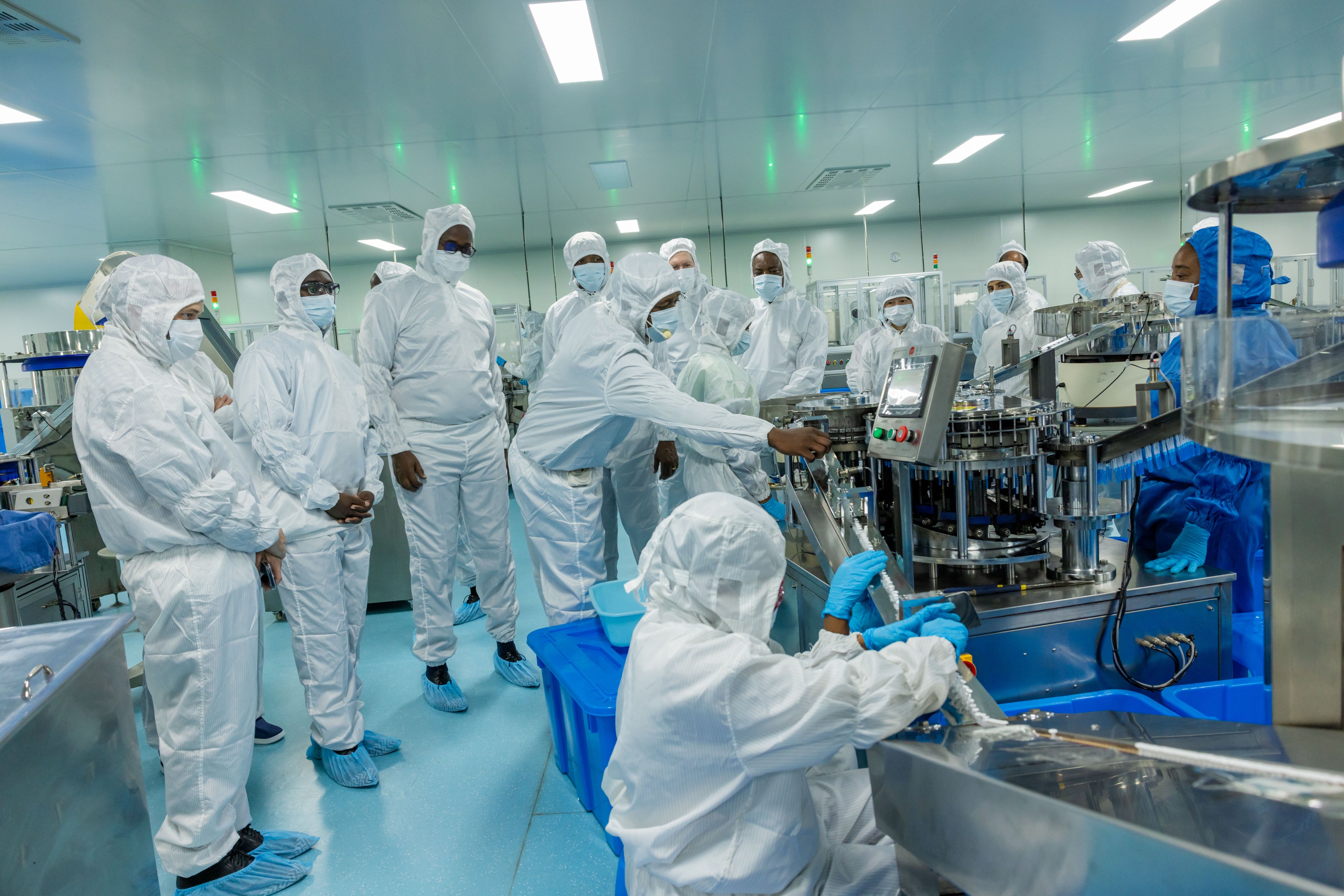
Strengthening “Made in Rwanda” industrial growth.
Overview
The manufacturing sector contributed 9.9% to the GDP with CAGR of 21.5% for the period 2018-2022 (Source: NISR Statistical yearbook). The sector is still small, but it has been growing steadily. Since the adoption of the National Industrial Policy in 2011, several critical policy interventions and strategies have been developed such as Made in Rwanda policy, Entrepreneurship Development Policy (EDP), SEZ policy, the Domestic Market Recapturing Strategy (DMRS), the National Export Strategy, SMEs strategy, the National Export Strategy and Cross Border trade strategy.
Rwanda has preferential access to several international markets through the WTO’s special and differential treatment provisions.
Investment Opportunities
Light manufacturing:
Leather value chain
Pharmaceuticals
Automotive
Packaging materials (+container glass)
Consumer Products
E-Mobility
Garments
Wood products
Recycling
Electronics
many more sectors
Construction Materials:
Float Glass
Ceramics, Metals
Wood products
Natural construction materials
Plastics, Paints
+ many more sectors
Incentives to Support the Manufacturing Sector
Two main benefits incentivize local production over import:
Public procurement policy
Government of Rwanda procurement covers ~12% of GDP
“Made in Rwanda” policy allows for a benefit in public procurements when local value addition >30%
Bids meeting this criterion get a 15% preference over other bids
Smaller tenders (<10 mio and <100 mio RWF for services and works respectively) are always reserved for local suppliers
Customs benefits
When domestic value addition is significantly high (30% value addition), import duties levied are lowered:
0% for raw materials
10% for intermediate products
25% for finished products
This applies to imports from all countries outside the East-African Custom Union
Kigali Special Economic Zone (KSEZ)
Highly-serviced land offering incentives & subsidies
Expedited and serviced land
Phase I – 98 ha
Phase II – 178 ha
Phase III – ~153 ha (in plan)
Roads, water, elec…
Incentives and subsidies
Subsidized plot rate
30% down payment
2 year grace period with 10% int. (PII = 1 year with 15% int.)
Export Processing Zone status(EPZ) export >80% outside EAC
EAC EPZ status and benefitsNo import duty on inputs & equipment
Free trade conditions
Min. govt. processes
Key services offered in the SEZs to a variety of industries & companies
Power (Preferential electricity tariff structure for industrial companies), water and sanitation
ICT infrastructure like fiber optic plus wires networks 4G and 3G
Onsite and offsite roads links to airports and main roads
Firefighting network
Sewage network
Security
Overview
The manufacturing sector contributed 9.9% to the GDP with CAGR of 21.5% for the period 2018-2022 (Source: NISR Statistical yearbook). The sector is still small, but it has been growing steadily. Since the adoption of the National Industrial Policy in 2011, several critical policy interventions and strategies have been developed such as Made in Rwanda policy, Entrepreneurship Development Policy (EDP), SEZ policy, the Domestic Market Recapturing Strategy (DMRS), the National Export Strategy, SMEs strategy, the National Export Strategy and Cross Border trade strategy.
Rwanda has preferential access to several international markets through the WTO’s special and differential treatment provisions.
Investment Opportunities
Light manufacturing:
Leather value chain
Pharmaceuticals
Automotive
Packaging materials (+container glass)
Consumer Products
E-Mobility
Garments
Wood products
Recycling
Electronics
many more sectors
Construction Materials:
Float Glass
Ceramics, Metals
Wood products
Natural construction materials
Plastics, Paints
+ many more sectors
Incentives to Support the Manufacturing Sector
Two main benefits incentivize local production over import:
Public procurement policy
Government of Rwanda procurement covers ~12% of GDP
“Made in Rwanda” policy allows for a benefit in public procurements when local value addition >30%
Bids meeting this criterion get a 15% preference over other bids
Smaller tenders (<10 mio and <100 mio RWF for services and works respectively) are always reserved for local suppliers
Customs benefits
When domestic value addition is significantly high (30% value addition), import duties levied are lowered:
0% for raw materials
10% for intermediate products
25% for finished products
This applies to imports from all countries outside the East-African Custom Union
Kigali Special Economic Zone (KSEZ)
Highly-serviced land offering incentives & subsidies
Expedited and serviced land
Phase I – 98 ha
Phase II – 178 ha
Phase III – ~153 ha (in plan)
Roads, water, elec…
Incentives and subsidies
Subsidized plot rate
30% down payment
2 year grace period with 10% int. (PII = 1 year with 15% int.)
Export Processing Zone status(EPZ) export >80% outside EAC
EAC EPZ status and benefitsNo import duty on inputs & equipment
Free trade conditions
Min. govt. processes
Key services offered in the SEZs to a variety of industries & companies
Power (Preferential electricity tariff structure for industrial companies), water and sanitation
ICT infrastructure like fiber optic plus wires networks 4G and 3G
Onsite and offsite roads links to airports and main roads
Firefighting network
Sewage network
Security
Strengthening “Made in Rwanda” industrial growth.
Overview
The manufacturing sector contributed 9.9% to the GDP with CAGR of 21.5% for the period 2018-2022 (Source: NISR Statistical yearbook). The sector is still small, but it has been growing steadily. Since the adoption of the National Industrial Policy in 2011, several critical policy interventions and strategies have been developed such as Made in Rwanda policy, Entrepreneurship Development Policy (EDP), SEZ policy, the Domestic Market Recapturing Strategy (DMRS), the National Export Strategy, SMEs strategy, the National Export Strategy and Cross Border trade strategy.
Rwanda has preferential access to several international markets through the WTO’s special and differential treatment provisions.
Investment Opportunities
Light manufacturing:
Leather value chain
Pharmaceuticals
Automotive
Packaging materials (+container glass)
Consumer Products
E-Mobility
Garments
Wood products
Recycling
Electronics
many more sectors
Construction Materials:
Float Glass
Ceramics, Metals
Wood products
Natural construction materials
Plastics, Paints
+ many more sectors
Incentives to Support the Manufacturing Sector
Two main benefits incentivize local production over import:
Public procurement policy
Government of Rwanda procurement covers ~12% of GDP
“Made in Rwanda” policy allows for a benefit in public procurements when local value addition >30%
Bids meeting this criterion get a 15% preference over other bids
Smaller tenders (<10 mio and <100 mio RWF for services and works respectively) are always reserved for local suppliers
Customs benefits
When domestic value addition is significantly high (30% value addition), import duties levied are lowered:
0% for raw materials
10% for intermediate products
25% for finished products
This applies to imports from all countries outside the East-African Custom Union
Kigali Special Economic Zone (KSEZ)
Highly-serviced land offering incentives & subsidies
Expedited and serviced land
Phase I – 98 ha
Phase II – 178 ha
Phase III – ~153 ha (in plan)
Roads, water, elec…
Incentives and subsidies
Subsidized plot rate
30% down payment
2 year grace period with 10% int. (PII = 1 year with 15% int.)
Export Processing Zone status(EPZ) export >80% outside EAC
EAC EPZ status and benefitsNo import duty on inputs & equipment
Free trade conditions
Min. govt. processes
Key services offered in the SEZs to a variety of industries & companies
Power (Preferential electricity tariff structure for industrial companies), water and sanitation
ICT infrastructure like fiber optic plus wires networks 4G and 3G
Onsite and offsite roads links to airports and main roads
Firefighting network
Sewage network
Security
Other Sectors
Other Sectors
Check our other various sectors with detailed Insights
Other Sectors
Other Sectors
Check our other various sectors with detailed Insights

Other Sectors
Other Sectors
Check our other various sectors with detailed Insights